
Table of Contents
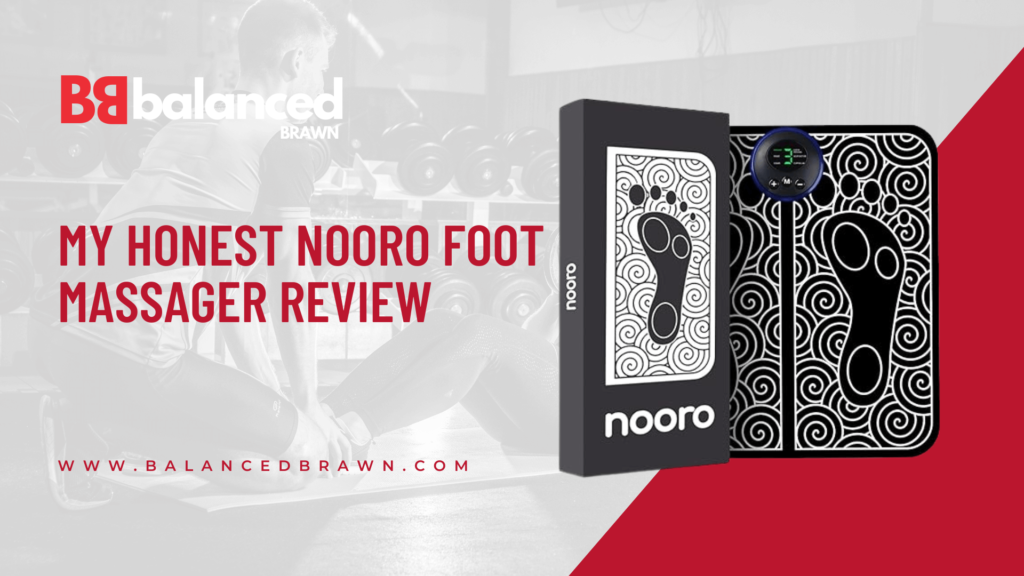
I’ll admit—I never thought I’d be someone to write a lengthy review about a foot massager. But here we are. After battling foot pain for years, from plantar fasciitis flares to general fatigue and swelling after long workdays, I decided to give the Nooro Foot Massager a try. There was a ton of buzz about it online, lots of mixed feedback, and I figured it might be worth seeing what all the fuss was about.
Now that I’ve used it consistently (and inconsistently) for a few weeks, I’ve got a lot to say—both good and bad. This review is for those of you who don’t want fluffy marketing talk, but the real deal from someone who’s actually used the device and lived with it.

Pros
- Lightweight and portable
- Drug-free foot relief (EMS-based)
- Multiple modes and intensity levels
- Rechargeable and foldable
- Can help with swelling and fatigue
Cons
- Relief is temporary unless used daily
- Poor customer service and warranty policy
- Durability concerns—mat and charger can fail over time
- No remote or app—requires bending down to operate
- Doesn’t work well for those with neuropathy or high arches
- Misleading name—this is not a “massager” in the traditional sense
What Is the Nooro Foot Massager?
Let’s clear something up first: this isn’t a traditional foot massager. If you’re expecting a device that kneads, rubs, or vibrates like one of those bulky foot spa machines, this isn’t that.
The Nooro device uses electrical muscle stimulation (EMS)—very similar to a TENS unit used in physical therapy. You place your feet on a flat mat, attach a small control disk, and it sends low-voltage electrical pulses into your feet and calves. It feels more like rhythmic tapping, twitching, or pulsing rather than “massage” in the usual sense.
First Impressions
When I unboxed it, I was honestly surprised by how thin and lightweight the mat was. It folds up neatly, and the design is sleek and travel-friendly. Setting it up was easy—snap the controller on, charge it, and go. The interface, while basic, was easy to understand. There are 6 different modes and 19 intensity levels to choose from.
But that’s where some quirks started to show up.
The Learning Curve
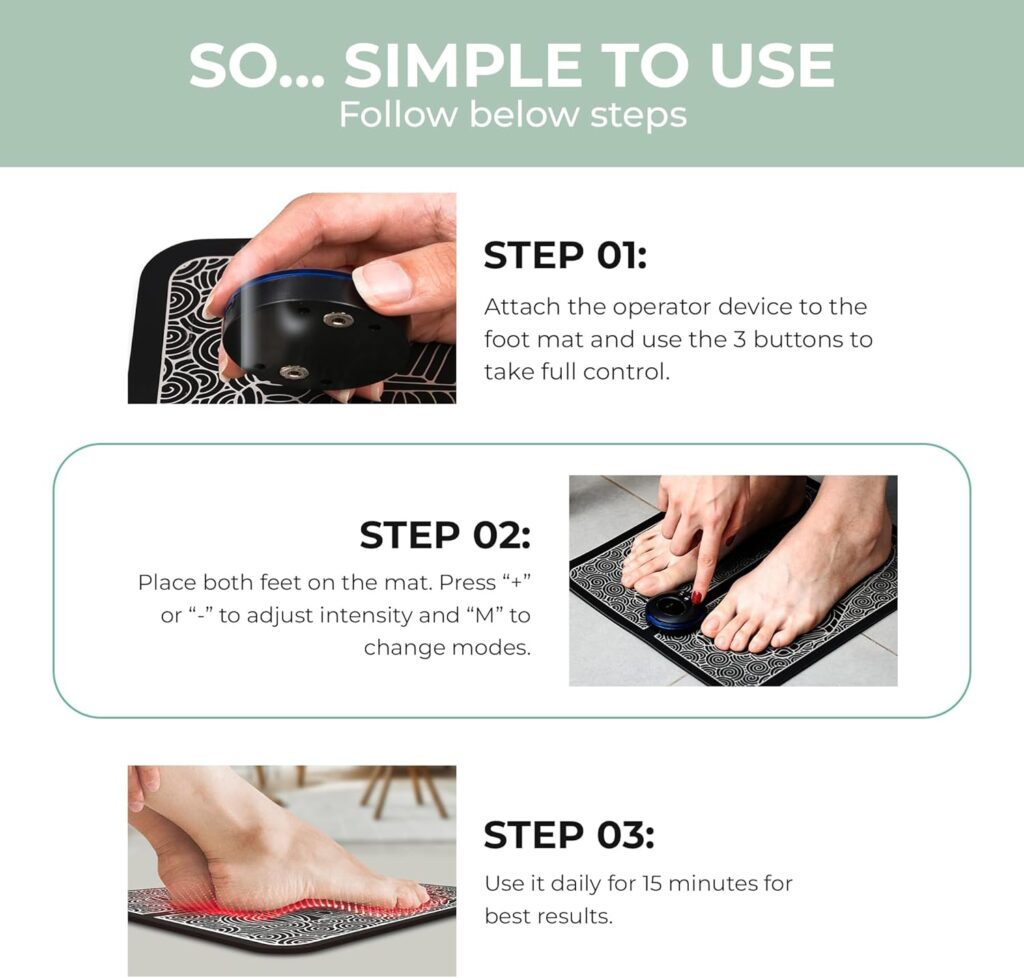
My first session? Confusing. I didn’t feel much of anything on level 1 or 2. By level 5, things started to twitch. At level 10, my calves were flexing involuntarily. Weird, yes. Uncomfortable? Not really—but definitely unusual if you’re not used to EMS.
Once I figured out how to position my feet properly and found a mode that felt tolerable, it was kind of relaxing. But it took a few sessions to get there. The biggest mistake you can make with this device is expecting instant gratification. It doesn’t work that way.
Also, the mat only works if both feet are placed correctly and your skin is making full contact. Dry skin or improper positioning can mess up the connection and cause the unit to shut off or act glitchy.
Does It Actually Help?
Yes… and no.
Here’s the honest truth:
✅ When it works:
- It gives a noticeable tingling sensation that travels up your calves.
- After a 15-20 minute session, my feet did feel lighter, less swollen, and less tense.
- On days when I’d been on my feet all day, using the Nooro genuinely brought relief.
❌ But here’s the flip side:
- The relief doesn’t last long. For me, the “ahh” moment faded after an hour or two. It’s not a miracle cure.
- Consistency is key. You need to use it daily for any long-term benefits. Skipping a day meant starting from scratch again.
- It doesn’t help all types of pain. If your pain is more centralized—like in the arches or heels—you might not feel much benefit. The electrical pulses are general, not pinpointed.
Build Quality & Durability
This is where my experience, and many others I’ve seen, took a frustrating turn.
The build feels a little too light, almost fragile. While the portability is a plus, I noticed the following issues after just a few weeks:
- The power pack started acting finicky. Sometimes it wouldn’t turn on unless I fiddled with it.
- The device randomly shut off mid-session, even when fully charged.
- The mat started to lose sensitivity, and I had to slightly wet my feet or the mat to get proper contact.
- Worst of all, I began to worry about longevity. It feels like one of those products that might not last past a few months.
Sure enough, after about 6 weeks, the intensity started feeling weaker even at the higher settings. While the unit technically still works, I can already tell it’s not going to last forever.
Let’s Talk About Customer Support
This is where Nooro drops the ball.
I had some questions early on about how to properly clean the mat and troubleshoot the connection. I reached out via email… and waited. And waited.
Eventually, I got a vague response with no real solutions. I’ve read plenty of accounts where others were left high and dry, especially if their device failed just after the 90-day warranty. That’s pretty unforgiving for a health-related product.
If you’re expecting top-notch support from Nooro, temper those expectations. It’s hit-or-miss at best.
Who Is This Good For?
If you’re someone with:
- Mild foot fatigue
- Swollen feet after standing or walking all day
- A love for TENS therapy
- A desire for a lightweight, travel-friendly device
Then this might work for you, as long as you’re realistic about what it can and cannot do.
Who Should Probably Skip It?
Skip this if:
- You have serious foot pain or neuropathy and need targeted relief
- You’re expecting a traditional kneading or rolling massage
- You want a plug-and-play device with zero learning curve
- You don’t want to replace it in 3–6 months
- You’re not into EMS-style therapy
Final Verdict: Is the Nooro Foot Massager Worth It?
Short answer: It depends.
As a foot-relief device, the Nooro offers an interesting alternative to bulky machines and messy creams. The EMS pulses can genuinely help with swelling and muscle fatigue—but it’s not a cure-all. And the quality concerns, unfortunately, hold it back from being a true long-term solution.
If it cost $50 or less, I’d say it’s worth a gamble. But at its current price point? It’s a risk—and one you might regret if your unit fails outside the short warranty window.
Personally, I still use mine—when it works—but I won’t be buying another unless the build quality improves. I’ve learned to treat it like a temporary tool in my pain relief toolbox, not a permanent fix.
Bottom Line: If you’re curious and willing to maintain it like a high-maintenance pet, give it a try. But go in with eyes wide open—and maybe a backup plan for when it inevitably wears out.
Related posts:
![My Honest Hyperice Hypervolt Go 2 Review]()
My Honest Hyperice Hypervolt Go 2 Review 2025
![Top Pickleball Court Surfaces: Which One is Right for You?]()
Top Pickleball Court Surfaces: Which One is Right for You?
![best resistance bands for p90x workout, p90x workout, p90x arms and shoulders, p90x workouts, best resistance bands, resistance bands workout, resistance bands for legs, pull up resistance bands, resistance bands for stretching, tricep workouts with resistance bands, bodylastic resistance bands]()
P90X Workout Powerhouses: The 6 Best Resistance Bands Unveiled!
![Vibrating vs. Rolling Foot Massagers]()
Vibrating vs. Rolling Foot Massagers: Which Type is Best for You?
![Red Light Therapy at Planet Fitness REVIEW]()
MY HONEST Red Light Therapy at Planet Fitness REVIEW 2025
![My Honest Coher Training Mask Review 2025]()
My Honest Coher Training Mask Review 2025




Today’s cast iron heater radiator combines modern aesthetics with exceptional durability—its thick walls store far more thermal energy than steel, providing lasting warmth long after the boiler stops. Easy to maintain and free from old concerns about leaking or clogging, the cast iron heater radiator proves that “slow and steady” reliability remains relevant even in an age of disposability. This cast iron heater radiator stands out as a timeless choice for those seeking long-lasting, low-maintenance warmth.
For more information about cast iron heater radiator visit https://www.bzradiator.com/
Your comment is awaiting moderation.
Black cast iron radiator products emerged in the late 19th century, offering over 30 years of corrosion resistance, 30–60 minutes of heat retention after shutdown, low noise, broad heat source compatibility, and refurbishable value. When buying, calculate heat output per room, match connection sizes, check for smooth surfaces and internal anti‑corrosion coating. For maintenance, use wet storage after heating season, clean the strainer every two years, wipe with a damp cloth, avoid impacts, and leave 10 cm clearance.
For more information about black cast iron radiators visit https://www.bzradiator.com/
Your comment is awaiting moderation.
Plastic formwork panels, made from polypropylene resin with a hollow cavity structure, are lightweight yet strong, offering excellent flatness and durability. Their key advantages include over a hundred reuses, 100% recyclability, easy handling (one‑third steel’s density), no need for release agents, resistance to moisture and chemicals, and full compliance with “replace wood with plastic” policies—cutting costs and saving forests. Although they won’t completely replace traditional timber or steel in the near future, their growing market share, driven by stricter environmental regulations, signals that a lighter, greener, and more sustainable formwork era is already on the horizon.
For more information about Plastic formwork panels visit https://www.bzformwork.com/
Your comment is awaiting moderation.
When choosing a sand-free cast iron radiator, most people focus on appearance, but residual sand from casting can cause blockages, wear, and water quality issues, so stricter cleaning and borescope sampling matter. A sand-free cast iron radiator uses automatic shot-blasting and high-pressure rinsing to keep residual sand extremely low, protecting downstream equipment, improving water quality, and allowing more even heat output. It is not necessary everywhere—old gravity systems can use ordinary castings—but in district heating, hard-water areas, and modern systems with smart valves, a sand-free cast iron radiator reduces failure rates and long-term repair costs. As heating systems evolve, it is moving from a bonus feature to a basic requirement.
For more information about sand-free cast iron radiator visit https://www.bzradiator.com/
Your comment is awaiting moderation.
Stone paper looks and prints like ordinary paper but contains no wood fiber: 60 to 80 percent ground calcium carbonate bound with a food-safe resin, made without water, bleach, or trees. Water beads on it rather than soaking in, it resists tearing in every direction, oils and stains wipe off, and print stays sharp with no show-through, which is why shampoo labels, frozen cartons, menus, and dive maps survive conditions that destroy a fiber sheet. It will not replace every paper job, but where water and grease are involved, a sample under the tap answers the question.
For more information about Stone Paper visit https://www.yh-stonepaper.com/
Your comment is awaiting moderation.